A note from BSI Founder & Director, Jason Geoffrion:
This page brings together the practical and the poetic – the tools that held me as I learned to orient life by timing, ritual, and inquiry. Here you’ll find:
~ Influential Book List: titles that shaped me during my active Gathering Phase (Ages 14 – 42) – books to read slowly, return to in seasons, and share aloud.
~ Creating an Altar Guidebook: a hands‑on companion for building simple life‑cycle, seasonal, and transition altars – with practical layouts, suggested objects and gestures, and short rituals for marking endings, beginning projects, or finding steadiness on difficult days.
~ Institute Guides Publications: books by our Guides that illuminate their work and bring practical wisdom and lived experience to the subjects they teach.
For more resources:
Join our online community and these resources expand into a living library: exclusive podcasts that deepen the themes from all our Institute Guide, symbolic developmental maps to help you locate yourself in time, beautifully designed Life Cycle workbooks for reflection and facilitation, peer Life Cycle engagement groups, guided meditations, and curated playlists that evoke each cycle’s mood. Membership also includes a ritual kit, as well as monthly live conversations with Jason Geoffrion and other Institute Guides that blend teaching and experiential learning. You will also have access to other live conversations for Q&A, embodied practice, and shared learning so you can test ideas and receive feedback from people on similar edges.
Treat this Resources page as a practical altar – visit often, take what resonates, and let these offerings rearrange your attention to support your continued becoming.
Influential Books in the Active Years of the
Gathering Phase of Life (Ages 14 – 42)
Click each book image to learn more or purchase your copy.
The Alchemist – Paulo Coelho
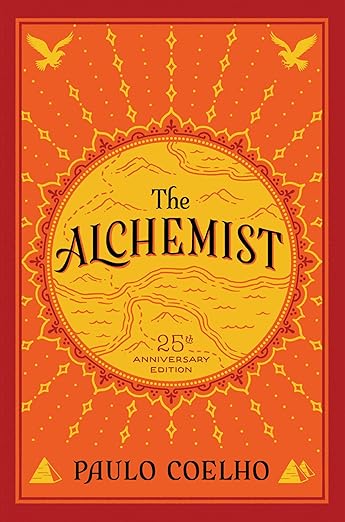
A young shepherd sets out to follow a dream and risks everything, while the world around him seems to conspire in small, uncanny ways. The narrative landed on me like a recognition more than a surprise; it read like a map of the interior life I began excavating after a first metaphysical experience at seventeen. That early encounter set me on a long arc of discovery and self-definition, and the book fit into that arc with a kind of quiet inevitability.
I found this book in my late twenties, and the feeling was immediate: this was a parable of my own slow becoming. Part of me wished I’d reached it sooner, but another part – one that had been tempered by the particular struggles of the years between – knew the timing was exact. The book didn’t hand me easy answers; it offered a story I was finally ready to listen to.
What struck me most was how earned the arrival felt. The protagonist’s revelation is not a tidy gift but the product of trials, mistakes, and a long apprenticeship in attention. That made the book feel true to the work I wanted for myself: not rescue or certainty, but a hard-won alignment with one’s inner gold.
If you need a story about calling, or a reminder that the journey itself carves you into who you become, this book is for you. It’s a companion for anyone learning to trust small signs and to stay faithful to a path that asks more of you than comfort.
Anam Cara – John O’Donohue
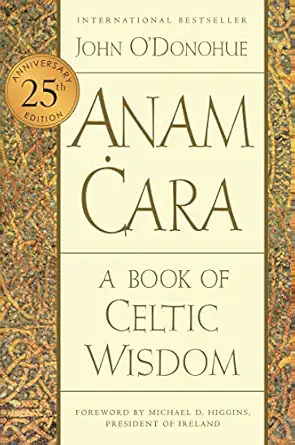
John O’Donohue writes like a guide who knows the terrain of the heart. Anam Cara is a book you can open anywhere and be found; each short essay lands like a small altar of attention where wisdom is waiting to be touched.
The section on Destiny shaped me more than most pages I’ve ever read. O’Donohue’s section, To Be Born is to Be Chosen, asks a fierce, tender question: imagine if you’d been born in the house next door; how would your life have differed. That thought made me see birthplace not as an accident but as a particular form of teaching. Where we are born shapes the challenges and openings that call us to fulfill our mission in this lifetime.
I discovered Anam Cara in my early thirties when my edges were hard with anger at my upbringing. The book did not argue me into gentleness, but it opened a slow permission to trust that I was born into precisely the conditions I needed to become fully myself. That shift softened my rigidity and invited a deeper trust that my wounds and place were part of the soil for the gifts I’m meant to offer.
This is a book for steadying the spirit. Keep it near your altar, flip to any page, and you will find a line that calls you back to belonging, to friendship with the self, and to the courage of being chosen by life. Read Anam Cara when you want companionship for the inner work of coming home to who you truly are.
The Art of Possibility – Rosamund Stone Zander & Benjamin Zander
This book is a practical alchemy of mindset and method that turns stuck thinking into generative possibility. The Zanders don’t just argue for a different way of seeing; they hand you practices that remake how you show up in relationships, leadership, and creative work.
The Core Invitation resonated with me so strongly in my Aligning Self (ages 28 – 34) – an invitation to shift from scarcity to possibility. The central move is simple and profound: stop defending what is and begin inventing what might be. Their framing practices – like “It’s All Invented,” “Giving an A,” and “Leading from Any Chair” – aren’t platitudes; they are repeatable ways to open space for curiosity, courage, and generosity.
Since first encountering this book, I’ve used these practices with groups and trainees and watched tense dynamics loosen into creative collaboration. The book taught me to offer permission before critique, to stake a future first and let the path reveal itself second, and to reframe failure as information rather than identity. Those shifts changed how I design trainings, hold circles, and invite people toward their edge.
Benjamin’s stories from the concert hall and Rosamund’s psychological clarity create a complementary blend of soul and structure. One gives the ache and lift of possibility; the other gives the tools to make that lift sustainable in everyday life.
Read this if you lead, teach, create, or simply want to stop defending your smallness. This book is for anyone ready to practice generosity of mind and experiment with new frameworks for attention and action.
The Art of Possibility doesn’t promise magic; it teaches habits of seeing that make new realities possible. Use it as a manual for inventing richer relationships, braver teams, and a life guided more by invitation than by fear.
Be Here Now – Ram Daas
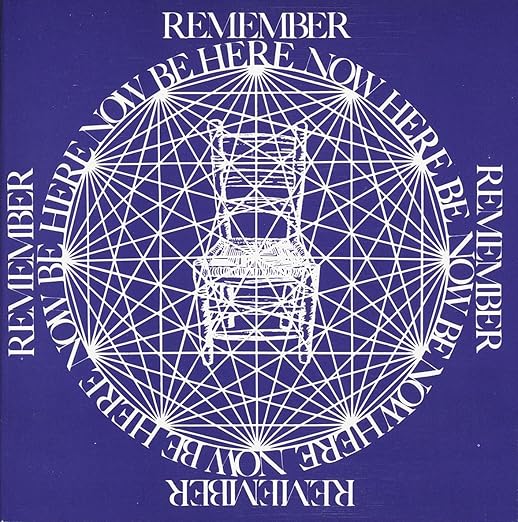
Be Here Now arrives like a map and a mandala at once, a book that teaches not by argument but by initiation. Its pages are spiritual, lyrical, and visually inventive, arranged so that reading becomes a practice rather than a pastime. The layout pulls the intellect toward the body and the body toward a softer attention, turning dense metaphysical material into something you can feel as well as think.
Read it from beginning to end and you receive a wide-angle curriculum in presence, compassion, and radical reorientation. Open it at random and you meet a single, potent teaching that can land with the force of a bell. The work functions both as a continuous course and as a deck of momentary teachings, equally useful for someone restructuring a life and someone who needs one clear instruction to steady a day.
What makes this book singular is its insistence on showing rather than telling. Ram Dass blends autobiography, instruction, and sacred improvisation so that the reader experiences revelation as a lived tempo. The visuals and the economy of language pierce through defensiveness and explanation, offering a practice that is practical because it is immediate and uncompromising.
This book is indispensable for anyone who wants a visceral companion on the path to presence. It resists being reduced to doctrine and instead offers tools for unhooking from old narratives, softening judgment, and returning repeatedly to what is available now. Skipping it is a missed opportunity to learn a form of attention that quietly reconstructs how you move through the world.
Becoming Animal – David Abram
David Abram writes with the patient clarity of someone who has relearned how to attend. This book is an invitation to recover the sensuous intelligence we share with the more-than-human world and to remember that perception itself is an enacted, reciprocal conversation.
The core invitation here is to recover embodied perception. Abram argues that sight, voice, and attention are not private possessions but participatory events that arise in relationship with land, creatures, and weather. Language is shown as a bridge and a trespass, capable of connecting us to the world and of severing the very sensibility that lets the world speak back.
Reading Becoming Animal reshaped how I teach, guide ritual, and design learning journeys. It shifted my focus from extracting lessons about nature to listening for the ways the natural world directs learning. My altars, walks, and ceremonies deepened when I began to treat perception as a co‑creative act rather than a solo achievement.
The lasting impact of this book aided me in moving from cognition to kinship. The book turned ecological concern into a felt obligation of presence. It invited me to slow down, to follow scent and movement, and to notice the quiet agency of place. That reorientation softened my teaching tone and made my invitations to others more humble and less didactic.
This is essential reading for anyone who wants to move from nature as backdrop to nature as a contributor to understanding and wisdom. Read it if you work with people in transition, design experiences grounded in place, or simply want your senses returned to you as living instruments.
Becoming Animal is not a how-to manual. It is a rewilding of attention that asks you to risk being more animal and less certain, to let the world teach you the grammar of belonging. Keep it near your bedside and your walking shoes.
The Book of Awakening - Mark Nepo
Mark Nepo writes like a gentle companion who knows the terrain of small mornings. This book is an anthology of bedside altars – short, luminous pieces that can transform a year if read daily or return a deep line of guidance when opened at random.
His deep invitation is to make the everyday a practice of awakening. Nepo’s work asks you to slow long enough to meet the ordinary as sacred. Each entry is a micro-ritual that teaches presence, compassion, and the habit of finding depth inside routine.
I use this book in two ways: as a daily discipline – one reading each morning for a year – and as a trusted friend to flip open when the day felt heavy. The daily practice rewove my attention into steadiness; the random-readings punctured stubborn certainty and offered exactly the line I needed most.
Whether you read one short entry a day and notice how small attentions accumulate into a gentler life, or keep the book near your altar and open it spontaneously; a single paragraph can act as a threshold into presence. Over time your language for grief, joy, and belonging becomes simpler and truer.
This is for people who want spiritual practice without ritual fuss – teachers, guides, parents, travelers, and anyone who wants a steady companion for private work. Use it as a yearlong apprenticeship in presence or as a pocket guide for urgent mornings.
The Book of Awakening is both map and moment. Let it be a daily pulse that rearranges your attention, or a small doorway you open when you need to come back to yourself. Read it slow, read it often, and let its quiet insistence do the rest.
The Celestine Prophecy – James Redfield
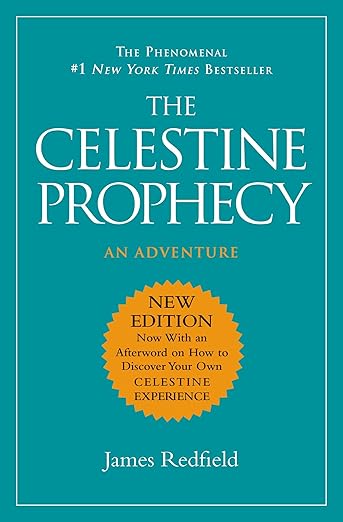
Synchronicity and right relationship thread through this winding adventure of self-discovery, offering a gentle but insistent framework for how meaning arrives in ordinary life. I picked it up in my early twenties when I was hungry for a map and had almost none that resonated. The story landed like an invitation: notice the signs, follow the prompts, and trust that the world is arranged to teach you if you learn to pay attention.
The plot pulls you into a physical quest where each encounter functions like a lesson; watching the protagonist learn to pause and read the world felt almost illicit in its tenderness. That romantic permission – to answer a heart-call and let intuition steer decisions – was something I rarely dared to grant myself then, and the book gave me language for that longing. My first encounter with synchronicity came here: the idea that the universe conspires to help when we stop rushing and start listening.
Over time those pages ceased to be only a story and became a practice. I began to structure decisions around subtle prompts and interior nudges, and that habit shifted the arc of my life in ways that have lasted for decades. The practice of tracing threads of calling has been one of the most consequential choices I’ve made; the book planted the seed and the habit watered it.
The book’s teaching on right relationship cut through my old instincts to complete or perfect others. Redfield offers an alternative image: overlapping circles rather than two halves waiting to be made whole. When I learned to honor what another person actually brought to a relationship, instead of forcing them into a fantasy, my connections changed – less drama, more clarity, more mutual growth.
If you’re searching for a readable, accessible initiation into noticing, intention, and the ethics of relating, this is a clear companion. It’s both plot and primer: a narrative that sparks curiosity and a set of practices that reward the curious. Read it when you need a map and revisit it when you want a reminder of how to follow the thread.
The House of Belonging – David Whyte
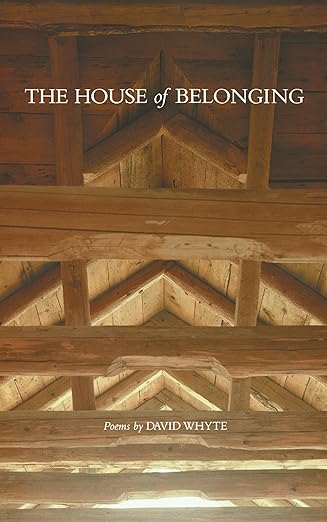
David Whyte writes like a friend who remembers the names of your secret rooms. This book is a small, wide house of poems where each doorway opens into belonging – belonging to self, to others, and to the larger, sometimes dangerous, steady world.
The invitation here is to come back to yourself through language. Whyte’s poems map the edges where longing meets courage and where loss teaches presence. He invites you to stand in whatever room you find yourself – grieving, triumphant, uncertain – and to name it fully so belonging can return.
I found these poems at moments when I needed permission to be both tender and resolute. Whyte’s voice softened the shame of being unfinished and gave precise, resonant language for the spiritual work of staying present. His lines became petitions I could return to when I needed to remember the shape of my own heart.
Keep the book by your altar or in your pocket. Read a single poem slowly, let a line settle on your tongue, and let it act as a ritual threshold. Whyte’s poems are small ceremonies – invocations that ground everyday life in deeper meaning and make ordinary tasks feel like devotion.
This book is for those who carry longings they can’t yet name, for teachers who need language to hold others, and for anyone longing to find a steadier home inside themselves. Read it aloud. Give a poem to someone who’s between places.
The House of Belonging is a companion for the work of returning – returning to voice, to courage, and to the quiet possibility that we are, at last, where we belong. Keep it close and let it call you home.
Illusions: The Adventures of a Reluctant Messiah – Richard Bach
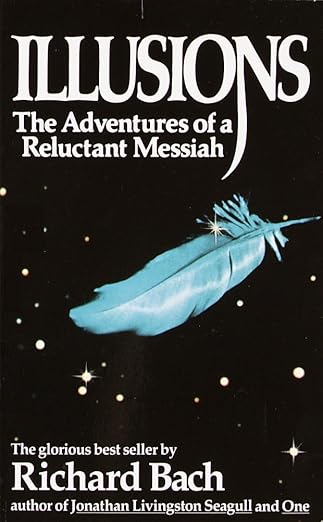
I was introduced to this book when I was 19-years-old by my Uncle Jeffry. I remember him only in vague flashes – eight years younger than my father, the youngest of four brothers. We saw him on holidays, when he’d arrive bearing presents and a haze of cigarette smoke. He was always that elusive family figure I never fully knew, his lifestyle so different from my parents’ (as I later learned).
A few months after I turned 19, at my grandfather’s funeral, I slipped into the dingy basement smoking lounge of the funeral home – a big, rebellious moment for me. My heart pounded, wondering what the rest of the family would think. Inside that dim, smoke-filled room was only one other person: Uncle Jeffry. We lit up in mostly silence, sitting amid his father’s death. After two or three cigarettes, he looked at me and said, “I was wondering if one of my nieces or nephews would ever be able to hold a conversation with me,” then stood and walked away.
A few months later, he invited me down to Dallas to spend Thanksgiving with him – just the two of us and his dogs, Boy and Girl. We roasted a huge bird with extra stuffing and cranberry sauce, because we agreed the real Thanksgiving magic is in the leftover sandwiches on Sara Lee wheat with plenty of mayo. Over four days we wandered through life, the universe, and everything, and he introduced me to Illusions. He also taught me to expand my preconceived notions of situational expectations. In this case if you’ve got money, fuck the dress code: sweatpants at a fancy steakhouse worked perfectly once he flashed his wad of cash. And the steak was the best I’d ever had.
He handed me a copy of Illusions as he drove me back to the airport. I read it for the first time on the flight home. Then I read it again the next week, and again the week after. It was the first book that spoke directly to my internal self – suggesting that my own wisdom was valid, even necessary to guide my life. My mind was blown, and I set off on a trajectory to find my true self. For years afterward, I kept extra copies on hand, ready to give one to someone after a soul-stirring conversation.
And now I encourage you to pick it up too. Timeless, simple wisdom – an invitation deeper into your own knowing. Enjoy!
Ishmael – Daniel Quinn
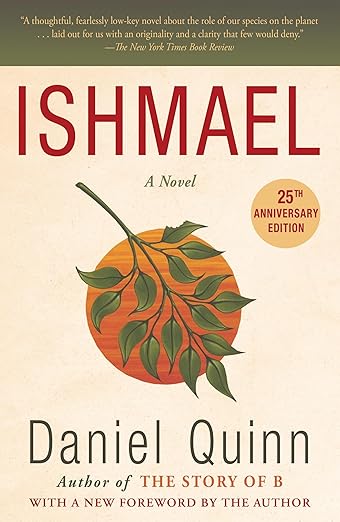
A gorilla placing an ad in the paper seeking a mentee – so delightfully absurd that when I read this in my mid-twenties, I found myself wishing for exactly that kind of invitation. I was starving for guidance, desperate for someone to pull me beyond my limited beliefs into a broader way of seeing.
Quinn stretches the boundaries of identity and unfolds life’s meaning as a dance between mind and spirit, reality and possibility. This spiritual adventure calls out our ingrained stories and patterned actions that too often steal the realm of the possible. Before Ishmael, I held small beliefs about who I could become. After it, I didn’t just imagine I was capable of more – I knew it.
This intellectual tale isn’t for the faint of heart, but is for anyone willing to face the corners where they’ve settled and open to deep knowing. Decades later, I still return to Ishmael’s lessons when I need a reminder of my own brilliance and humanity – and to reignite the call to live as the fullest expression of my deepest self.
Jonathan Livingston Seagull – Richard Bach
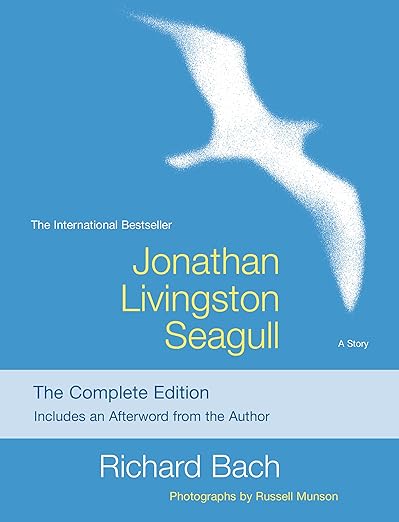
This was the first time I felt a book come alive in the world. After the resonance of Illusions I devoured everything Richard Bach wrote, but it was on the Cliffs of Moher in County Clare, Ireland, that Jonathan truly arrived for me. I was on a pilgrimage of sorts, intentionally sitting with authors where they lived and wrote, and I found myself on the cliff’s edge looking out over the ocean – rolling green land, harsh brown rock, and bright blue water arranged like a scene I’d only seen in films.
I had just turned twenty-one and was stepping fully into the Choosing Self, a shift I wouldn’t fully understand for years. Beyond the landscape’s grandeur my senses opened in a new register: I tasted salt on the wind, felt the soil of ancestral longings beneath my feet, and sensed a pull toward a horizon that felt both promise and demand. The moment built to a kind of pressure, a symphony of wanting and clarity that was almost unbearable.
Then a seagull appeared – hovering ten feet from my face, level with the cliff, looking at me with a calm, unbothered knowing for thirty seconds before launching down the rock and out over the sea. In that instant the bird was Jonathan, and the certainty I’d been chasing since my first metaphysical wake-up at seventeen settled into my chest. Tears came without warning; they felt like a homecoming for an inner truth I finally recognized.
Since then I’ve seen Jonathan two more times and every sighting felt like a quiet confirmation; I no longer need proof. Sometimes when a seagull crosses my path I imagine it’s him dropping in, and that’s enough. He comes when you’re ready – no searching required – and that gesture of arrival is one of the clearest lessons this book and that cliff taught me about courage, attention, and the simple fury of choosing to fly.
Joshua – Joseph F. Girzone
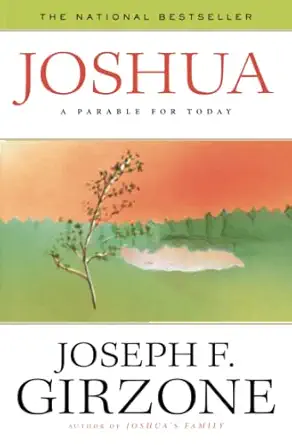
This book was my first clear invitation to move away from inherited dogma – son of a preacher, great-grandson of a traveling evangelist – and toward a life rooted in intention instead of righteous indignation. Joshua reads like a modern parable that quietly expands what’s possible for anyone of character and purpose, regardless of creed or external expectation.
Girzone’s narrative is unadorned and gentle, and wisdom seeps through example rather than exhortation. I learned that truth can arrive in imperfect clothing: a humble life, lived plainly, often speaks more convincingly than the loudest sermon. The book showed me how teaching can land even when its carrier is fallible.
Joshua also made clear that standing in your own truth invites fear and resistance. Growth asks for discernment – knowing what you believe while keeping compassion for where others are on their path. That tension became a template for how I began to practice conviction without contempt.
Whether you were raised in a strict religious home or simply want to live more honestly by your own inner knowing, this story offers steadiness, clarity, and a quiet courage. It’s the kind of book that settles into you and changes the shape of later choices.
Life, the Universe and Everything (Hitchhikers Guide to the Galaxy – Douglas Adams
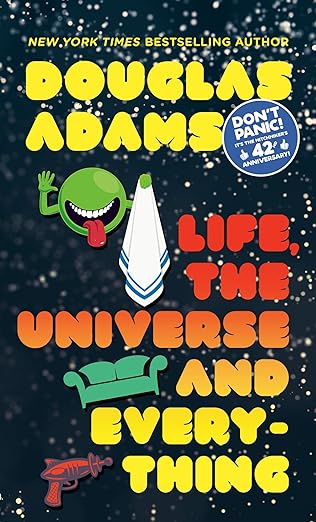
Douglas Adams offers a peculiar gift: a concrete answer to the question of life’s meaning and, at the same time, a lesson that the search for that answer is the point. The ‘answer’ is funny and final, and the comedy around it teaches that certainty – when handed to us – only matters insofar as it propels the asking.
Adams gives you a concrete punchline and then shows how the chase, the mistakes, and the roadside conversations are the real substance. The book argues that a tidy answer is amusing, useful, and oddly necessary; more importantly, the wild and wandering journey that led to it is where life is lived.
I first read this at twenty, during another Thanksgivings with my Uncle Jeffry, who passed the paperback to me like a small rite. Between leftovers and Rumikub we traded lines, laughed, and tested whether an absurd answer could free us to keep asking better questions. Those holiday readings turned the book into a ritual: the concrete answer became a compass needle that pointed us back to curiosity.
Adams loosened my hunger for definitive answers while honoring the comfort of a clever one. The book taught me that an answer can be a launchpad rather than a finish line, and that living into the question is where discovery and meaning accrue.
Read this if you want permission to hold certainty lightly and keep moving. Carry it on the road, read it aloud at the table, and let its absurdity sharpen your hunger for the next question.
Life, the Universe and Everything hands you a concrete joke about meaning and then invites you to turn that joke into motion. Let it unsettle your need for finality, stoke your curiosity, and, whatever else you do, don’t forget your towel.
The Life You Were Born to Live - Dan Millman
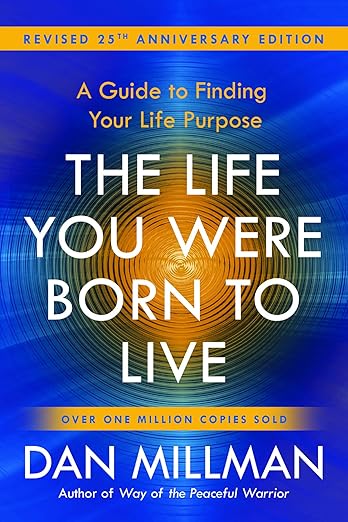
Dan Millman writes like a cartographer of the soul, offering a map that feels both precise and mysteriously alive. This book hands you a language for destiny without claiming to close the question; it frames your life as a pattern to be read, practiced, and embodied.
Millman proposes that we each carry a distinctive life path – strengths, challenges, and lessons woven together – and that recognizing this pattern can free you from blind repetition, especially when met with curiosity and courage.
I encountered this book at a moment when I was hungry for orientation rather than prescriptions. Millman’s blend of story, typology, and tender provocation gave me permission to see my yearnings as clues and my old defenses as curriculum. It helped translate aimless longing into actionable attention.
The book offers concrete tools – profiles, practices, reflective prompts – that invite experimentation. When I treated the descriptions as an invitation to test rather than a label to own, they became mirrors and compasses: clarifying blind spots, honoring gifts, and pointing toward practices that actually changed my habits and relationships.
Read this if you’re seeking a practical language for purpose – practitioners, seekers, and guides who want to move from wondering into doing. Use it as a curriculum for personal exploration or as a conversation starter with clients and communities.
The Life You Were Born to Live is a generous manual for becoming more of who you already are. Let it help you translate destiny into daily discipline and curiosity into courageous living.
Meeting Life - J. Krishnamurti
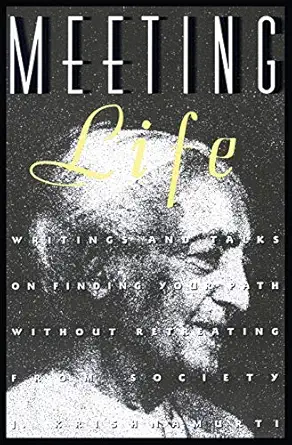
Krishnamurti writes like a still bell that wakes the room. Meeting Life is an invitation to stop rehearsing answers and to attend, without agenda, to what is actually here – to face experience without the safety net of ideology.
Krishnamurti asks you to notice your thinking, your fears, and your patterns as they arise, then to let them pass without stitching meaning onto them. The radical clarity he models is not doctrine but a discipline of attention: meet life exactly as it is and let understanding emerge from direct seeing.
This book arrived at moments when I was tempted to tidy complexity into comforting stories. Its insistence on raw attention cracked open the habitual narratives I carried and made room for a quieter, more honest responsiveness. Instead of looking for tools to fix myself, I learned to cultivate the simple capacity to witness – an act that changed how I show up with others and with the world.
His invitation is to turn observation into a practice. Read a short passage slowly, notice which thoughts and feelings arise, and let them move through you without judgment or quick explanation. Over time this discipline loosens reactivity, deepens presence, and reveals how much of life we miss when we busy ourselves with interpretation rather than attention.
This book is essential for anyone tired of technique and ready for radical honesty – teachers, guides, or seekers who want a practice that isn’t about becoming someone else but about being more awake to who you already are.
Meeting Life won’t give you a map. It will teach you how to travel differently: less defended, more awake, and with a steadier heart. Keep it close when you want to trade strategy for attention and curiosity for certainty.
On the Road - Jack Kerouac
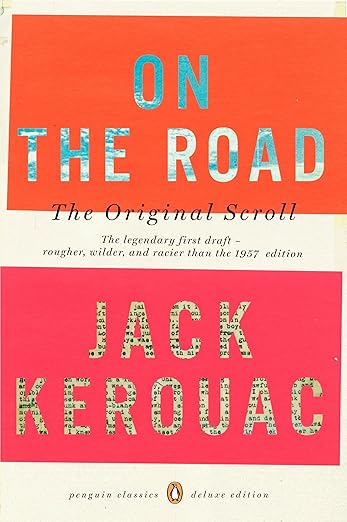
Kerouac’s book is a hymn to the kind of freedom that breaks the map and opens the body to discovery. The characters live with an unapologetic, restless joy that reads like permission: permission to leave, permission to wander, permission to invent your own way of being on the road.
I met this book at a pivotal edge in my life. Its rhythm and reckless tenderness moved something loose inside me and, at twenty-two, I answered that pull by moving to Alaska. The two-week trek north was a Kerouac pilgrimage – a deliberate shedding of everything familiar, a single-minded trust in the road to teach me who I might become when all plans fall away.
Kerouac doesn’t offer neat lessons; he offers a condition: show up, lose your scripts, and be willing to be found. The prose propels you forward while quietly insisting that what matters is the interior route as much as the miles. Read it if you need permission to get lost, if you want to test your edges, or if you’re ready to follow a wild, imperfect longing.
This is a book for anyone who suspects that the only way to know themselves is to keep moving until the inner map redraws itself.
The Prophet – Kahlil Gibran
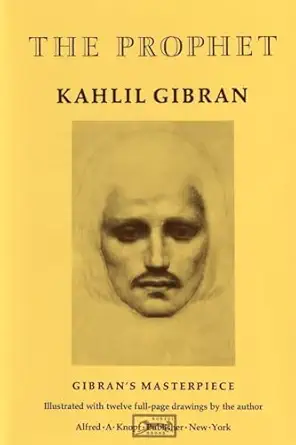
This was the first parabolic work that reached me after the religious texts of my childhood, and it arrived like a long, careful exhale. Where those earlier scriptures had often reopened old wounds, Gibran’s voice both resurfaced that pain and offered a wider frame in which it could finally sit. The book did not erase the past; it translated it, giving language to the ache and a place for tenderness to grow.
Gibran’s prose moves like poetry that has learned to walk: spare, embodied, and startlingly exact. Each short chapter addresses a facet of life as if speaking to a person rather than a doctrine, and the result is a set of teachings that land in the body as much as the mind. Read straight through and you feel a curriculum unfold; open to a page and a single passage can become a practice for the day.
What surprised me was how flexible the book is across time. In moments of confusion it steadied me; in seasons of clarity it deepened what I already felt. Its wisdom asks nothing flashy – only presence, honest listening, and a willingness to meet life’s contradictions with love. That modest demand made the text an ongoing companion rather than a one-time revelation.
Twenty-five years on, I still find new meanings lodged in the lines. The Prophet has been both mirror and map: it reflects the contours of my particular history while guiding how I attend to what comes next. It’s a slim book with the stubborn power to reorient the way you live.
The Road Less Traveled – M. Scott Peck
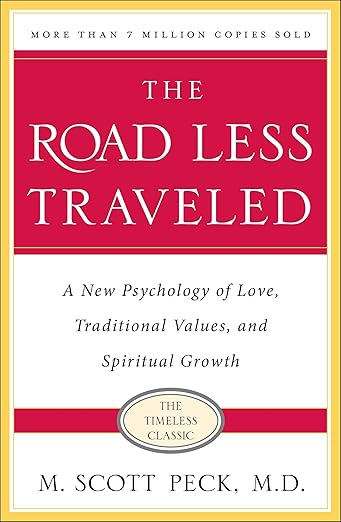
Peck writes like a firm, compassionate teacher who refuses shortcuts. This book offers a blunt, humane invitation: growth requires discipline, honesty, and the courage to suffer well.
Peck’s central move is clear: life’s real work is not avoiding pain but learning how to meet it – through delayed gratification, responsibility, and honest self-examination. He frames love as an active practice rather than a feeling and places discipline at the heart of genuine belonging and maturity.
I encountered this book during my Choosing Self Life Cycle (ages 21-27) – a time when I wanted earned results but shortcuts and excuses still held sway. Peck refused them elegantly, turning impatience into a map. His insistence that we accept responsibility for our interior lives shifted my posture from victim to steward. That shift mattered in relationships, in how I taught, and in how I tended my own edges.
Peck gives structure to inner work: name your patterns, accept the pain of change, and practice love as action. Over time this discipline loosens reactive habit, deepens intimacy, and transforms suffering into a source of clarity rather than a justification for avoidance.
Read this if you’re ready to trade easy stories for real work. It’s for people who lead, teach, or guide others and for anyone willing to do the painstaking work of becoming reliable, present, and morally awake.
The Road Less Traveled is rigorous and humane – there is no consolation prize for staying small. Let it challenge you to take responsibility, practice love, and walk the harder path that actually makes a life worth living.
Sophie’s World – Jostein Gaarder
Sophie’s World arrives as a tender invitation: two simple questions – Who am I? and Where does the world come from? – unspool into a winding, humane exploration of thought and origin. The book held the exact permission I had been craving since adolescence, the permission to treat philosophic curiosity as a necessary practice rather than an optional hobby.
Gaarder writes with a childlike clarity that conceals deep sophistication; the narrative voice keeps wonder awake while steadily introducing the history of ideas. Reading it in my early twenties felt less like learning and more like being apprenticed to a way of asking better questions. The protagonist holds space not just for a character but for the reader, and that porousness is the book’s quiet miracle.
The book made philosophy feel intimate and actionable: ideas stopped being remote doctrines and became lenses for living. Each lesson landed as a tool I could actually use to make sense of love, choice, and the habit of being. Sophie became a companion in the slow work of discovering an inner map, and I still seek her companionship sometimes..
If you’ve ever felt the itch to trace how you arrived at the assumptions you live by, this is the book that hands you a compass. Read it when you need permission to wonder and return to it whenever the world starts to feel taken for granted.
Stories of Men, Meaning and Prayer - Jeffrey Duvall
I was twenty-three, newly arrived in Colorado and stocking shelves at Barnes & Noble, when I first saw this book in the used section. The word prayer on the cover reawakened the old wounds of my upbringing, so I walked past it, only to come back weeks later and slip it into my bag. I’ll admit I stole it – at the time a rebellious act was the only way I could justify taking it home.
I read the Introduction and the first chapter, “Longing and Meaning,” and every sentence landed like a remembered language. It cut so close to the bone that I hid the book in a closet beneath a pile of junk; my life then – living with the woman who would become my first wife – was built on duty, not truth, and that book threatened the fragile architecture I’d learned to maintain.
Four years later, during our separation, I found the buried volume while clearing out our condo. At a friend’s place, a temporary refuge, I opened it at random and my eyes fell on a line I had underlined: “The death of our life’s previous stage is necessary for the next opportunity of life to emerge.” The moment broke me open; tears came without warning and I devoured the rest of the pages that day, scribbling notes and finally breathing after years of holding my breath.
At the back of the book Duvall had left his address. I wrote a raw, rambling letter and a week later he called. He invited me to his studio in Nederland – a small, strange cabin threaded with rattles, bones, and quiet power – and greeted me with a weathered smile and piercing eyes. He asked gentle questions and shared two sentences that have stayed with me: You are beautiful just as you are. There is nothing wrong with you.
Over the next six months, as the life I’d built unraveled, I clung to those words. Duvall later invited me on a Vision Fast; I had no idea what that meant, but I said yes. That Fast changed me in ways I still carry, and it all began with the small, furtive act of taking a book home. If you are searching for quiet, soulful resonance, regardless of gender, Stories of Men, Meaning and Prayer offers deep, practical tenderness that can shift the shape of a life.
Walden – Henry David Thoreau

“We must learn to reawaken and keep ourselves awake, not by mechanical aids, but by an infinite expectation of the dawn, which does not forsake us in our soundest sleep.” This line has been my email tagline for nearly twenty-five years.
I first met Thoreau during a Transcendentalist unit in high school. Thank you, Mr. Harlan. Before that class I’d never encountered the language of transcendence, the belief in the innate goodness of people and nature, the trust in individual intuition to discover truth, or the idea of the Oversoul – a unifying spiritual force that binds all life. At seventeen those ideas felt both like an answer and a provocation; they resonated so fully with my interior life and yet sat at odds with everything I’d been taught. The notion of someone choosing solitude in the woods felt like a direct summons to the soul I was only beginning to recognize.
Walden became a foundation text for me. Its lessons moved slowly through my life like an undercurrent, patient and persistent. It took years to begin living what it taught, but the call never left me. Today I live intentionally in a home surrounded by trees so I can wake each morning and listen to the natural world. I have arranged my adult life around self-reliance and the work of discovering identity beyond society’s expectations. I am learning, at last, to surrender to the universal force Thoreau names, the presence that appears when I quiet my mind and listen with greater depth.
Walden is a timeless classic that keeps renewing its relevance. Thoreau’s clarity and quiet insistence invite you to cultivate your own “infinite expectation of the dawn.” Read it not as an escape but as a practice: use his words to sharpen your attention, trust your intuition, and tend a life that answers your deepest longings. Find your own Walden and follow it.
Way of the Peaceful Warrior – Dan Millman
This book stretched the edges of what I believed I was capable of. The protagonist charges forward, driven by ego – proving himself at any cost, growing too big for his britches while insisting he’s still in control – until everything crashes down. Only at rock bottom does he accept help and connect to something deeper and larger than himself.
I first read it in the middle of my own Dark Night of the Soul. Millman’s confusions, strivings, and inevitable fall felt less like fiction and more like a mirror. Though his circumstances weren’t mine, his unraveling reflected the compost pile my life had become, waiting to be turned into fresh growth.
A surprising mentor in the story – a gas station attendant – becomes the hero’s most important teacher. At the time I longed for that kind of devotion, while still armored by religious trauma. Millman’s work gently cracked that armor, teaching me to notice the small prompts that whisper through ordinary days and to trust them.
For years I tried to become the warrior on the page, chasing an ideal. Over time, inspiration softened into surrender, and I began following the subtle threads of guidance in my own life. I stopped imitating someone else’s path and, finally, became myself.
If you want a book that will prod you, unsettle you, and then open doors you didn’t know existed, read this one. It will meet you at your edge and invite you to step through.
The Wild Edge of Sorrow - Francis Weller
Francis Weller writes like a midwife for grief, naming its depths and insisting that sorrow is not an illness to cure but a wilderness to be tended. This book is a map and a liturgy for those who want to learn how to grieve well, together and alone, so grief can become a source of wisdom and connection rather than something to hide.
Weller argues that grief carries vital intelligence about what’s been lost, what still loves us, and how we might reconfigure our lives in response. The work isn’t to bypass pain but to learn its language, to answer its calls, and to build rituals and containers that let grief shape us without killing us.
I read this book in seasons when personal and collective losses felt too large for simple consolation. Weller’s voice gave words to the ache I’d been averting and offered practices that honored both the private wound and the communal need. His blending of myth, psychology, and ceremony allowed my mourning to become not just sorrow but an altar for presence.
Weller provides concrete invitations to ritualize the wild edges: communal lament, remembrance ceremonies, and creative acts that hold grief’s energy. Practicing these shaped how I hold grieving people, how I invite groups into honest presence, and how I construct altars and rites that let sorrow pass through without being swallowed by it. Over time grief’s sharp edges softened into channels of care and deeper relationality.
This book is essential for therapists, ritual designers, community leaders, and anyone living with loss – recent or ancient. Read it if you want language for sorrow, structures for bearing it together, and permission to grieve without apology.
The Wild Edge of Sorrow doesn’t promise relief from pain. It promises accompaniment: a steady, wise hand for learning how to keep walking when the world has changed. Let it teach you how to make mourning an act of belonging and how to let sorrow, finally, teach you how to love.
Zen and the Art of Motorcycle Maintenance – Robert M. Pirsig
From childhood summers with National Geographic to my first solo trip abroad at fourteen, travel always felt like a doorway into other worlds. By twenty-one I had visited more than thirty countries on itineraries engineered to “maximize experiences.” I loved the sights but didn’t notice that my method kept me tethered to expectation instead of presence.
When I first learned to drive, I started taking long road trips across the United States. I loved the highway’s hum and the way new landscapes slipped by and stirred my senses. Still, I measured miles against an agenda, ticking boxes instead of breathing in each moment’s gifts. Planning felt safe; presence felt uncertain.
Pirsig changed the way I travel and the way I live. He showed me that a journey can be a meditation in motion, that the cadence of an engine can teach grounded attention, and that true wandering is not aimless but deeply intentional. When I loosened my grip on orchestrating every turn, I began to trust the road’s unfolding. Unexpected friendships, roadside lessons, and simple acts of repair became my primary teachers. Presence proved far richer than any well-mapped route.
I still love a planned road trip or an international adventure, but now I only map the starting point and let the rest arise. If you want a reminder that life’s art lives in ordinary moments – between the throttle and the open air – this book is a roadmap. Enjoy the ride!
Altar Guidebook
The essence, reason, and ritual behind your altar
Institute Guides Publications
Click each book image to learn more or purchase your copy.
Defining a Masculine Self: A Phenomenological Study on the Impact of Men’s Retreats - Jason Geoffrion
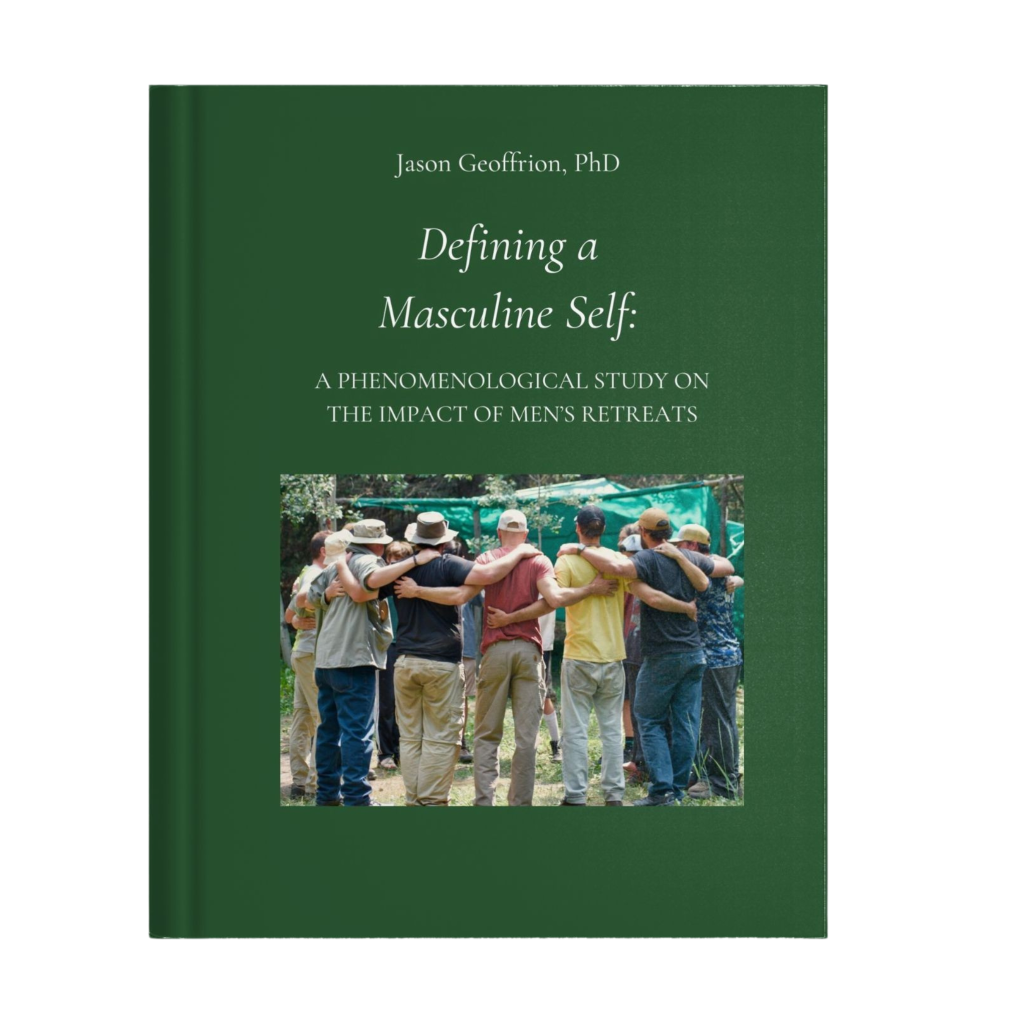
The purpose of this transformative phenomenological study was to understand the impact attending a men’s retreat had on men’s lives months after participation. A major focus of the study was perceiving the men as their own authorities on their lives and experiences. Blending information from lifespan developmental theorists such as Levinson (1978), Lidz (1983), and Vaillant (1977), with information on the importance of community and communitas (Buber, 1961; Schwalbe, 1996) and Merleau-Ponty’s (2012) discussions of both the impossibility of separating mind and body, and the witness self, the stories of the participants demonstrated these concepts.
The men discussed the necessity of participating in groups and retreats for men only, sharing how they found these to be transformational, impactful, and important for supporting them in defining and embodying their own versions of masculinity in healing and holistic ways. While the primary focus was on the impact of the retreat months after the experience, the stories involved life experiences pre-retreat, during-retreat, and post-retreat. Four categories of themes emerged for each of these segments. Pre-retreat themes were lack, isolation, resignation, and unawareness. During retreat themes were counter-cultural masculinity, community, accessing emotions, and developing a witness self.
Post-retreat themes were exploring/embodying self-defined masculinity, forming/deepening connections, shifting/solidifying personal beliefs, and accessing/increasing consciousness. Differentiations were made between first-time and returning participants.
Empowered: The Business Owners Guide to Leadership & Success - Dominica Lumazar
Has your business hit a plateau? Learn how to take your company to new heights with empowering leadership strategies.
Are you too caught up in the day-to-day tasks of your venture? Do you struggle to concentrate on the big picture? Are you wondering how to strategically position your products or services? Author, entrepreneur, and business consultant Dominica Lumazar has spent more than a decade helping a variety of clients collectively generate over a billion dollars in revenue. Now this successful and sought-after businesswoman is sharing her most valuable advice, so you can supercharge your bottom line.
Empowered is a detailed guide to building key leadership skills to steer your organization toward even greater success. Using scenarios from Lumazar’s own client projects, as well as targeted action steps, you’ll learn how to increase customer retention and create marketing plans to outshine the competition. Whether you’re a seasoned owner or an aspiring entrepreneur, by taking the time to prioritize your business and marketing education, you’ll soon be enjoying a new level of profitability.
In Empowered: The Business Owner’s Guide to Leadership and Success, you’ll discover:
- An innovative leadership framework you can use immediately to save time and money
- How to maintain focus throughout your business and maximize your efforts
- Powerful ways to establish branding and outreach while making the most of your ad budget
- 6 easy to follow tips for retaining your customers
- How to consistently rise above the daily grind to start each day energized, and much, much more!
Empowered: The Business Owner’s Guide to Leadership and Success is an inspiring and relatable handbook to help you develop your business. If you like down-to-earth recommendations, step-by-step techniques, and straightforward been-there, done-that guidance, then you’ll love Dominica Lumazar’s motivational resource.
Overcoming Body Hatred Workbook: A Woman’s Guide to Healing Negative Body Image and Nurturing Self-Worth Using CBT and Depth Psychology - Kathryn Holt
Do you hate your body? Are you deeply dissatisfied with your appearance, shape, or weight—so much so that you avoid looking at yourself in the mirror, avoid certain social situations, or dread having your photo taken? If so, you are not alone. Body dissatisfaction and even body hatred have reached epidemic levels in our culture—particularly for women and girls. But you don’t have to live your life consumed by feelings of shame and self-hatred. This workbook offers a way out of the darkness.
Grounded in evidence-based cognitive behavioral therapy (CBT) and depth psychology, this workbook offers a two-pronged approach for healing from negative body image, so you can literally feel more comfortable in your own skin. You’ll find powerful skills to help you cope with the stress and intense emotions caused by body hatred, as well as strategies to help you nurture a deeper sense of self-worth.
With this workbook, you’ll learn to move past your physical body to focus on:
- Identifying your values and your life’s purpose
- Finding your voice and using it to set boundaries—with yourself and others
- Managing life stress in healthy ways
- Changing how you respond to toxic cultural messages about appearance
- Cultivating an embodied presence in the moment
The psychological and emotional toll of body hatred is immense. If you’re ready to heal the stress and pain of feeling “not okay” in your body, this workbook can help you make peace with your physical appearance and feel whole as a person.
The Stronger Than BPD Journal: DBT Activities to Help Women Manage Emotions and Heal from Borderline Personality Disorder - Kathryn Holt
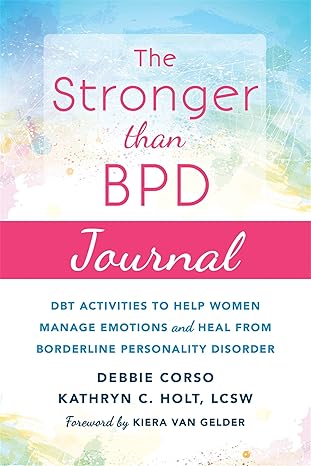
Your story is just beginning. In The Stronger than BPD Journal, influential BPD blogger, advocate, and peer educator Debbie Corso and psychotherapist Kathryn C. Holt offer guided writing activities to help you work through strong emotions, strengthen emotional resiliency, and build lasting relationships.
If you have borderline personality disorder (BPD), you may have trouble managing your intense emotions, navigating day-to-day life, and maintaining healthy relationships. You may also have trouble seeing yourself clearly beyond your diagnosis. But you should know that—while BPD is a part of your life’s story—BPD isn’t the whole story.
This unique journal offers gentle guided exercises based in dialectical behavior therapy (DBT) to help you balance your emotions, take time for self-care and exploration, and put a stop to overly critical self-judgment. You’ll also learn to reduce stress, upsets, and triggers; gain resiliency; and improve communication with others.
Writing can be a vehicle for profound self-reflection, exploration, and healing. This guided journal will help you take control of your emotions, gain insight into your unique mind, and start living the life you deserve.