Kathryn Holt
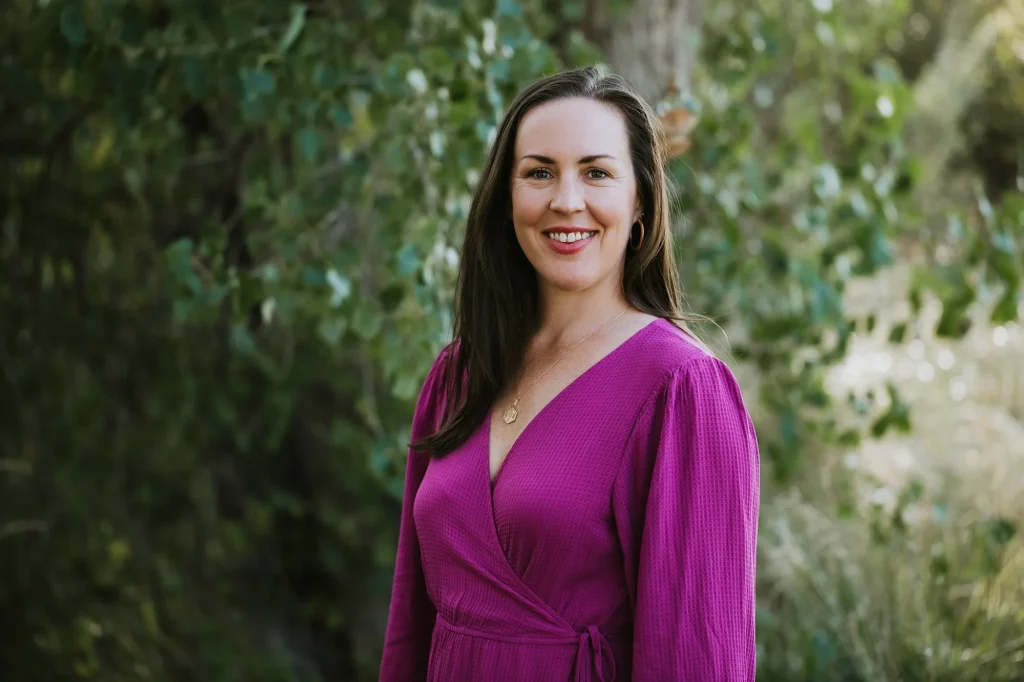
Kathryn Holt, PhD, LCSW is a psychotherapist, teacher, and writer whose work centers on helping people live in their bodies respectfully. Trained in depth psychology and clinical social work, she specializes in supporting adults – especially mothers and caregivers – navigate life transitions and grow through periods of incredible stress. Her practice integrates feminist, behavioral, and depth psychologies to cultivate soulful, embodied pathways to wellbeing.
Research & Theoretical Work
Kathryn’s doctoral research focused on how cisgendered women move through the journey from body discontent/body hatred to relative body peace. Her research was grounded in depth and feminist psychologies, yet her interpretations were also informed by her behavioral background in clinical social work from Columbia University. Her theoretical work draws from her experience in feminist psychoanalysis she was involved with in New York City as well as more body-based modalities like Gestalt psychotherapy. She pulled all of these threads together to weave her most recent book together, the Overcoming Body Hatred Workbook, published with New Harbinger Publications. Her previous co-authored book was focused on DBT, entitled, The Stronger than BPD Guided Journal, was written to support people who are emotionally sensitive.
Approach and Practice
Her clinical work is rooted in depth (Jungian/Archetypal) and behavioral psychologies, attachment and regulation science, psychodynamic and psychoanalytic work, as well as contemporary feminist theory. Her doctoral and master’s training at Pacifica Graduate Institute is balanced with clinical social work credentials from Columbia University and specialized trainings in DBT/RO DBT, TF-CBT, ARC, Gestalt, Qoya Inspired Movement, and somatic trauma work. This eclectic, evidence‑informed base allows her to tailor interventions that honor mythic meaning, developmental sequencing, and practical skill building.
She uses long‑form psychodynamic work alongside practical skills-based interventions. Her style is direct, compassionate, and developmentally attuned, supporting clients to reclaim bodily authority, develop emotional literacy, and translate insight into sustainable change.
Personal Journey and Leadership
Kathryn’s clinical sensibility is informed by a personal trajectory through disconnection, illness, and motherhood. Growing up in the American South amid pressures of appearance and performance shaped her early coping and later vocational calling. The challenges of new motherhood during the pandemic reframed her work, deepening her commitment to accompanying caregivers through the dissolution of transformation. She teaches and practices from lived recovery, honesty, and earned empathy.
Programs and Community
Kathryn offers individual psychotherapy, clinical consultation, and workshops that integrate movement, ritual, and regulation. She has been a long-time teacher at DBT Path, the longest-running online DBT class. Kathryn is also a frequent contributor and visiting teacher to community programs that invite her to teach on her research on the spiritual journey from body hatred to body peace.
.
Guides, Mentors and Elders
Kathryn was fortunate to have many guides and elders in her clinical development. Specifically, faculty at the Women’s Therapy Center Institute in New York, her dissertation committee, and Qoya Inspired Movement communities. Anita Johnston, the author of Eating in the Light of the Moon, helped guide her research and wrote the foreword to her book on body hatred. Marion Woodman, Clarissa Pinkola Estes, and James Hillman offer a foundation for archetypally informed clinical work from afar. She is also regularly inspired and supported by friends and colleagues who are engaged in their own creative work.
Life and Commitment
Kathryn is a mother, wife, therapist, and seeker who is passionate about ongoing learning. She is committed to providing clinically rigorous work for her community. She believes in radical openness – knowing we cannot fully know ourselves without the help of others – and it is the work of our lifetimes to live into our vocational callings.